
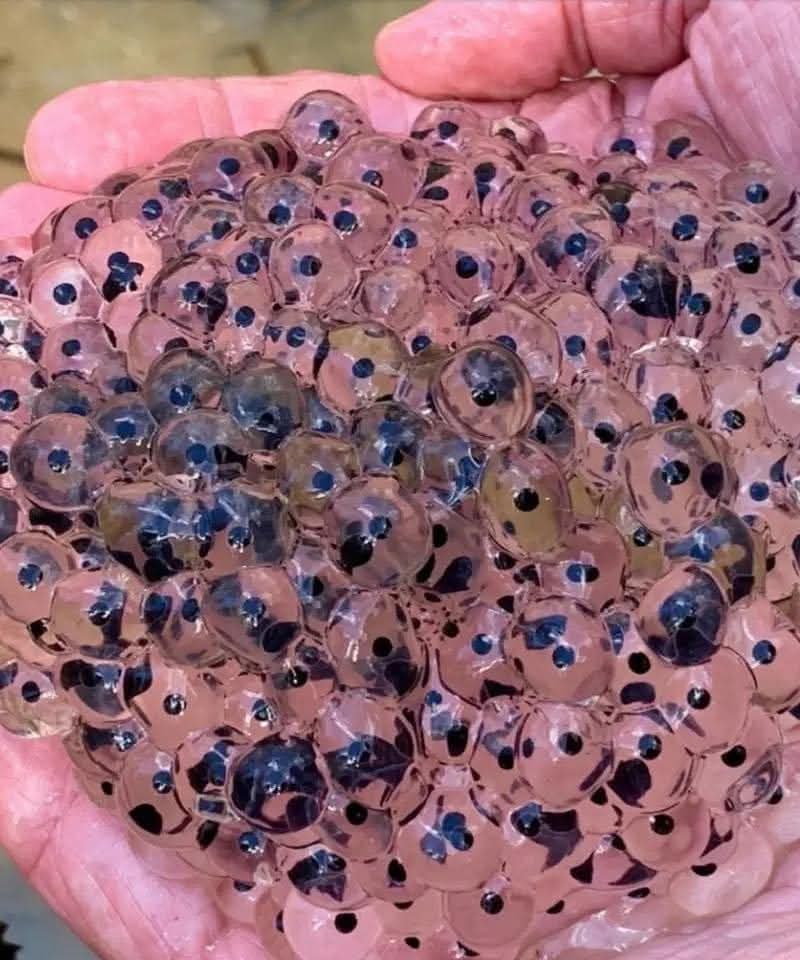
They were eager, excited, and after a few minutes of careful inspection, they looked at Thomas with wide eyes.
“You may have found something remarkable,” the lead researcher said. “These are tree frog eggs.”
Thomas raised an eyebrow. “We don’t have tree frogs around here.”
“Not until recently,” she replied.
A Species on the Move
The scientists explained that the eggs belonged to a rare species of tree frog—one not previously seen in this part of the state. Warmer temperatures and changes in seasonal rainfall patterns were shifting the boundaries of their natural habitats. What was once unsuitable terrain had quietly become a new breeding ground.
“These frogs typically lay their eggs on leaves or calm water,” one biologist noted. “But they’re adapting. This damp soil and these puddles—this might be their way of surviving in new territory.”
It was a quiet revelation, but a powerful one. Climate change wasn’t just a phrase on the news—it was unfolding gently, silently, in the corner of Thomas’s field.
A Farmer Becomes a Steward
Thomas didn’t say much that day. He simply nodded, thanked them, and watched them drive away.
But from that moment forward, everything felt different.
Each morning, before tending to his soybeans or checking the tractor oil, he visited the puddle. The eggs, once just a cluster of mystery, now pulsed with life. Inside the jelly-like casings, tiny shapes began to form—wiggling slightly, shimmering under the sunlight.
Thomas, who had delivered calves and raised chicks, who had watched seeds burst into bloom and wilt again with the season, felt a new kind of awe. This wasn’t just nature—it was survival. It was change. It was hope.
Wanting to help without interfering too much, he carved a shallow depression nearby and filled it with rainwater. He watched as the water settled, clear and still. It wasn’t much—but it was enough.
A Field Transformed
Within days, the area around the eggs came alive with new activity. Dragonflies buzzed over the water. Birds perched nearby, curious but cautious. And in the heart of a working farm, a sanctuary began to form.
Tractors rumbled in the distance. Soybeans continued their quiet upward stretch. But in one muddy corner, nature rewrote its story.
Thomas found himself pausing more. Listening more. Watching the rhythm of the land shift, ever so slightly, into something unexpected and beautiful.
