
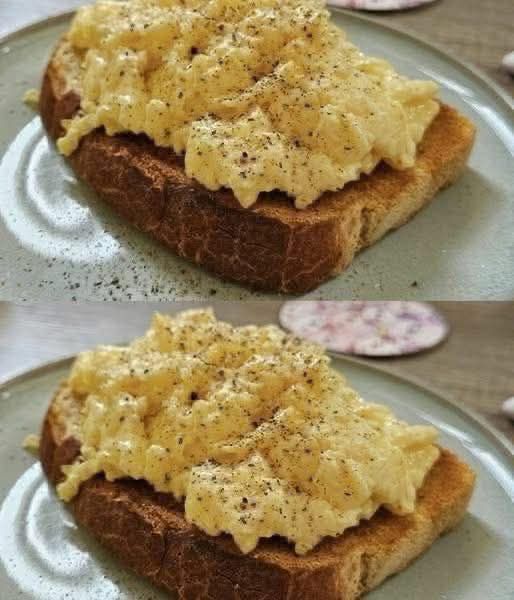
(Serves 2)
6 large eggs (organic if possible)
2 tablespoons whole milk OR heavy cream (for extra creaminess)
1 tablespoon unsalted butter (plus more for the pan)
Salt to taste (preferably sea salt or kosher salt)
Freshly ground black pepper to taste
Optional: chopped chives, shredded cheese, crème fraîche, or herbs for garnish
The Secret Tools You’ll Need
Nonstick skillet (8–10 inch)
Silicone spatula (for gentle folding)
Medium mixing bowl
Whisk or fork
Low heat source (important!)
Step-by-Step Instructions
1. Crack and Beat the Eggs Properly
Start by cracking all the eggs into a bowl. Don’t just stir them quickly with a fork—whisk them vigorously for at least 30–45 seconds. The goal is to fully incorporate the yolks and whites until the mixture is a uniform, pale yellow with a slightly frothy surface. This step helps incorporate air, making the eggs lighter.
2. Add Cream or Milk (Optional but Game-Changing)
For richer, creamier eggs, add 2 tablespoons of whole milk or heavy cream to the bowl. This not only softens the curd texture but also makes the eggs more decadent. Avoid skim milk—it waters down the flavor.
3. Season Smartly (Before or After?)
Some chefs add salt before cooking, others wait until the end. Adding it before helps the eggs retain moisture, but if you’re new to the technique, you can season after to avoid overdoing it.
4. Low and Slow: Mastering the Heat
This is the most critical step!
Place your nonstick skillet on the stove over low heat. Add the butter and let it melt slowly. You don’t want it to sizzle—if it starts to foam or brown, the pan is too hot.
Once the butter melts, pour in the eggs. Wait a few seconds until you see the edges just barely begin to set.
5. The Gentle Stir
Using a silicone spatula, gently push the eggs from the edge of the pan toward the center. Do this slowly and continuously, forming soft folds rather than stirring rapidly. You want to avoid breaking the eggs into small pieces. The slower you cook, the creamier the texture.
6. The “Off-the-Heat” Trick
As the eggs start to set but still look slightly runny, remove the pan from the heat. The residual heat will finish cooking them. This is the difference between fluffy and rubbery.
7. Finishing Touches
Add a tiny pat of cold butter or a spoon of crème fraîche right at the end for a glossy finish and an extra hit of richness. Top with salt, pepper, chives, or cheese as desired.
