
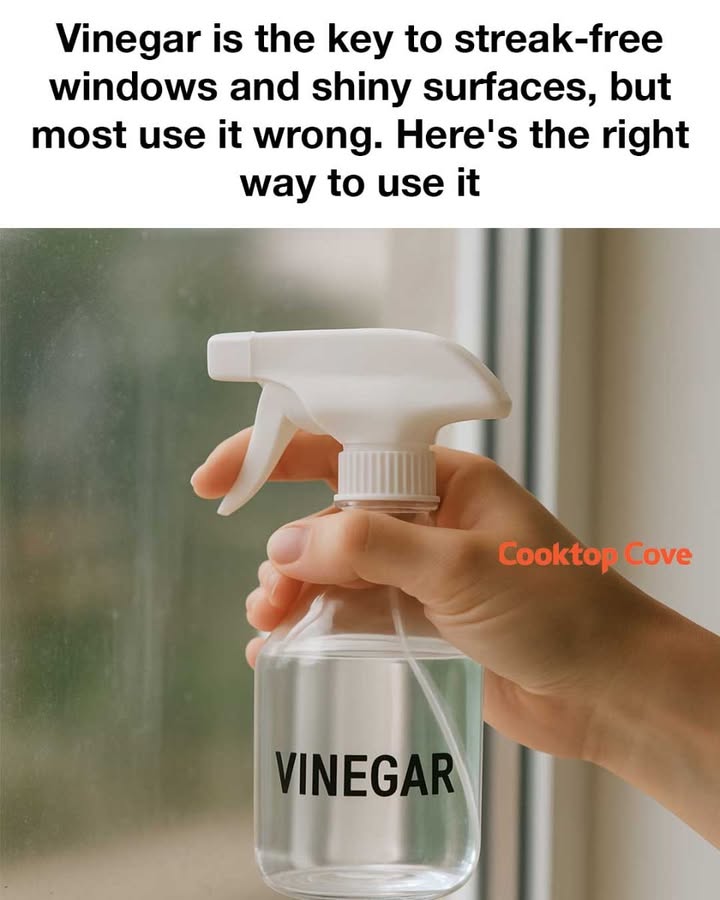
Vinegar is the key to streak-free windows and shiny surfaces, but most use it wrong. Here’s the right way to use it
3. The Right Vinegar to Use for Streak-Free Windows
For cleaning windows, distilled white vinegar is the best choice. It is clear, colorless, and has a higher acidity level compared to other types of vinegar, such as apple cider vinegar. The lack of color ensures that it won’t stain surfaces, and its high acidity makes it effective at cutting through grime and leaving windows streak-free.
When purchasing vinegar for cleaning, look for a product with at least 5% acetic acid content. This concentration is sufficient for most cleaning tasks and ensures that the vinegar will be effective without being overly harsh.
4. Preparing the Perfect Vinegar Cleaning Solution
To prepare an effective vinegar cleaning solution for windows, mix equal parts distilled white vinegar and water in a spray bottle. For example, combine 1 cup of vinegar with 1 cup of water. This dilution is gentle enough for most surfaces while still retaining the cleaning power of vinegar.
For particularly stubborn grime or mineral deposits, you can increase the vinegar concentration slightly, using a 2:1 ratio of vinegar to water. However, always test the solution on a small, inconspicuous area first to ensure it won’t damage the surface.
5. The Best Tools to Use with Vinegar for Cleaning
Microfiber cloths are the best tool to use with vinegar for cleaning windows and surfaces. They are highly absorbent, lint-free, and gentle on surfaces, making them ideal for achieving a streak-free finish. Avoid using paper towels, as they can leave lint and streaks behind.
For windows, a squeegee can also be a valuable tool. After applying the vinegar solution with a spray bottle, use a squeegee to remove excess liquid and prevent streaks. Be sure to wipe the squeegee blade with a clean cloth after each pass to avoid transferring dirt back onto the window.
6. Step-by-Step Guide to Cleaning Windows with Vinegar
1. Begin by dusting the window surface with a dry microfiber cloth to remove loose dirt and debris.
2. Spray the vinegar and water solution onto the window, covering the entire surface evenly.
3. Use a clean microfiber cloth to wipe the window in a circular motion, loosening any dirt and grime.
4. For a streak-free finish, use a squeegee to remove the solution from the window, starting at the top and working your way down. Wipe the squeegee blade with a cloth after each pass.
5. Finish by wiping the edges of the window with a clean, dry microfiber cloth to remove any remaining moisture.
continued on next page
